Installing a new air conditioner is more than placing equipment outside a home and turning it on. A properly installed HVAC system requires careful planning, accurate sizing, professional connections, and detailed testing. The quality of the installation directly affects comfort, energy use, and how reliably the system performs over time.
For homeowners considering AC installation San Jose, understanding each stage of the process helps them make better decisions when choosing equipment and hiring an HVAC contractor. A professional installation ensures your cooling system is designed for your home rather than simply fitted into an existing space.
At Innovation Heating & Air Inc., we help homeowners throughout San Jose understand their options and complete reliable air conditioning projects with attention to safety, efficiency, and long-term performance.
Why Professional AC Installation Matters
A new air conditioner is a major investment, but even a high-quality system can struggle if it is installed incorrectly. Professional installation ensures that every component works together as designed, from the thermostat communication to the airflow throughout your home.
Many homeowners focus only on the equipment brand or efficiency rating. However, installation quality plays an equally important role. A correctly installed HVAC system can provide more consistent cooling, reduce unnecessary energy use, and help avoid frequent service problems.
Choosing professional AC installation services gives homeowners access to trained technicians who understand system design, manufacturer requirements, and local cooling needs. A qualified installer evaluates the entire home instead of treating the AC unit as a standalone appliance.
What Happens Before a Professional AC Installation Begins?
Before installation day arrives, an experienced HVAC contractor performs several important evaluations. This preparation stage helps determine what type of system your home needs and prevents problems that could affect performance later.
A proper installation begins with understanding the home, existing equipment, and comfort goals. This allows the technician to create an installation plan that matches the property.
Home Evaluation and Cooling Requirements Assessment
The first step in the AC installation process is an in-home assessment. A technician examines your home’s layout, current HVAC setup, and cooling challenges before recommending equipment.
During this evaluation, professionals review important areas such as ductwork condition, insulation levels, electrical capacity, and existing airflow patterns. These factors influence how effectively a new air conditioner will cool your home.
A detailed assessment also helps determine the correct system size. Proper AC sizing prevents issues caused by installing a unit that is too large or too small for the property.
Selecting the Right Air Conditioner Size and System Type
Choosing the correct air conditioner requires more than looking at the square footage of a home. An HVAC professional considers heat gain, room usage, insulation quality, and local climate conditions before selecting equipment.
An oversized system may cool quickly but fail to remove humidity properly. An undersized unit may run constantly while struggling to maintain comfortable temperatures.
During a residential AC installation, technicians consider efficiency ratings such as SEER2 and ensure the selected equipment meets current performance standards. The goal is to install a system that provides dependable comfort while operating efficiently.
Reviewing Installation Options and Project Planning
Before work begins, the HVAC contractor explains the recommended installation approach and prepares homeowners for the project.
Important planning considerations include:
- Equipment compatibility: The technician confirms that the new HVAC system works correctly with existing components or identifies upgrades that may be needed.
- Installation location: The team determines the best placement for indoor and outdoor equipment based on airflow, access, and safety requirements.
- Project preparation: Homeowners receive information about installation steps, expected timing, and any areas that need to remain accessible.
Good planning creates a smoother installation experience and reduces unexpected issues during the project.
Step-by-Step Professional AC Installation Process
Once planning is complete, the installation team begins replacing or installing the HVAC equipment. Each stage requires technical knowledge and careful attention because small installation errors can affect system performance.
The following steps explain what homeowners can expect during a professional installation.
Step 1: Removing the Existing Air Conditioning System
For homeowners completing AC replacement San Jose projects, the first installation step involves safely removing the old equipment.
Technicians disconnect electrical connections, remove outdated components, and properly handle existing refrigerant according to safety requirements. The installation area is then prepared for the new system.
Replacing an older unit also gives professionals an opportunity to inspect surrounding components. Issues with ductwork, electrical systems, or drainage can be addressed before the new equipment is installed.
Step 2: Preparing the Installation Area
Before placing new equipment, technicians prepare the installation locations to ensure proper operation.
This process may include checking mounting surfaces, confirming drainage paths, reviewing electrical requirements, and preparing connections between system components.
A clean and properly prepared installation area supports better reliability. It also helps ensure that the new air conditioner operates according to manufacturer specifications.
Step 3: Installing the Indoor Air Conditioning Components
The indoor portion of an HVAC system includes important components such as the air handler and evaporator coil. These parts work together to distribute cooled air throughout the home.
During installation, technicians carefully position the equipment and connect it with existing ductwork. They check that airflow pathways are properly sealed and that the system can move conditioned air efficiently.
A professional air conditioner installation San Jose project includes attention to these details because indoor components directly affect comfort levels in each room.
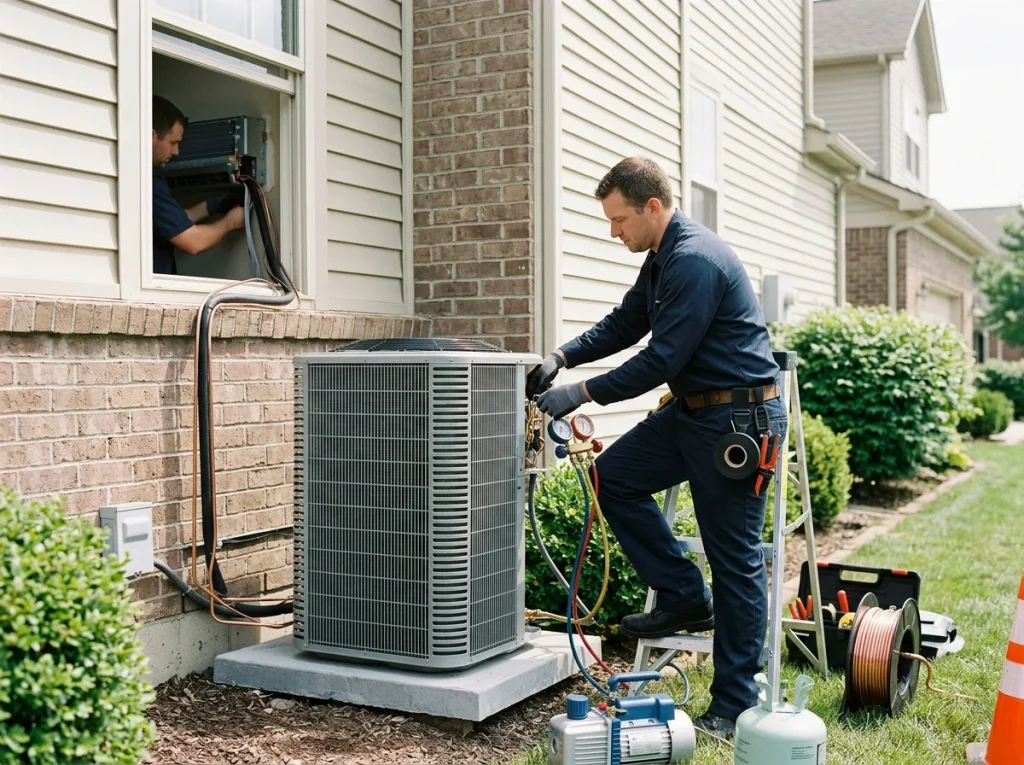
Step 4: Installing the Outdoor Condenser Unit
The outdoor condenser unit contains key components such as the compressor and condenser coil. Proper placement is important because the unit needs enough airflow to release heat effectively.
During outdoor condenser installation, technicians ensure the equipment sits on a stable surface with proper clearance around the unit. They also connect refrigerant lines and electrical components according to system requirements.
Correct outdoor installation helps protect the equipment and supports efficient operation throughout the cooling season.
Step 5: Connecting Refrigerant Lines, Electrical Components, and Drainage
After installing the main equipment, technicians complete the critical connections that allow the system to operate.
These connections include:
- Refrigerant lines that transfer cooling between indoor and outdoor components.
- Electrical connections that safely power the HVAC system.
- Condensate drain lines that remove moisture collected during cooling.
Professionals also inspect the electrical panel to confirm that the home’s power system can safely support the equipment.
Proper installation of these components is one reason homeowners choose experienced HVAC installation services instead of attempting complex work themselves.
How Technicians Test and Activate a Newly Installed AC System
After the equipment is installed and all connections are completed, the final stage focuses on testing and system verification. A professional HVAC contractor does not simply turn on the air conditioner and leave. Technicians carefully inspect operation to confirm that the system is safe, efficient, and ready to provide reliable cooling.
Testing helps identify installation issues before they affect homeowner comfort. This quality-control process is an important part of professional air conditioner installation because it confirms that every component works together correctly.
System Startup and Performance Testing
Once installation is complete, the technician starts the HVAC system and checks how each component performs. This includes reviewing temperature output, airflow levels, refrigerant pressure, and electrical operation.
During this stage, technicians perform airflow testing to make sure cooled air moves properly through the home. They also check thermostat communication, safety controls, and system response to different settings.
Proper testing helps ensure the new air conditioner operates according to manufacturer specifications. It also allows technicians to correct small issues before they become larger performance problems.
Final Inspection and Homeowner Walkthrough
A professional installation does not end when the equipment begins running. The technician completes a final inspection and explains how the new system works.
Homeowners receive guidance about thermostat settings, filter replacement, maintenance schedules, and basic system care. This information helps protect the investment and keeps the HVAC system operating efficiently.
Choosing an experienced AC installation company means homeowners receive support beyond equipment placement. A quality contractor helps customers understand their system and feel confident using it.
How Long Does Professional AC Installation Usually Take?
The installation timeline depends on the type of project and the condition of the existing HVAC system. A straightforward replacement may take less time than installing a completely new system with additional modifications.
Factors such as equipment access, ductwork changes, electrical upgrades, and system complexity can influence the schedule. A professional HVAC contractor evaluates these details before beginning work.
Typical project considerations include:
- Standard AC replacement: Usually involves removing an older system and connecting new equipment with existing infrastructure.
- New AC installation: May require additional planning because new components, connections, or ductwork may need to be added.
- Complex HVAC upgrades: Projects involving electrical improvements or major system changes may require additional installation time.
AC Replacement vs New AC Installation: Understanding the Difference
Homeowners often use the terms AC replacement and new installation interchangeably, but they describe different situations. Understanding the difference helps you choose the right service for your home.
AC Replacement
An AC replacement involves removing an existing cooling system and installing updated equipment. This option is common when an older unit becomes inefficient, requires frequent repairs, or no longer meets household comfort needs.
For homeowners searching for AC replacement and installation, technicians typically evaluate the current system first. They check whether existing ductwork, electrical connections, and other components can support the replacement unit.
New AC Installation
A new AC installation involves adding a complete cooling system where one does not currently exist. This may require additional planning for ductwork, electrical capacity, thermostat placement, and equipment location.
New installations are common in homes undergoing major renovations, additions, or upgrades where central air conditioning was not previously available.
Why Professional AC Installation Matters for Long-Term Performance
The quality of installation has a direct impact on how well an air conditioner performs over time. Even an energy-efficient system can lose performance when components are incorrectly installed or poorly matched to the home.
Professional technicians follow manufacturer requirements and industry standards when completing HVAC projects. They make sure refrigerant levels, electrical connections, airflow, and system controls are properly adjusted.
For homeowners investing in HVAC installation San Jose, working with trained professionals helps create a reliable cooling system designed around the home’s specific requirements.
A properly installed system can help homeowners enjoy:
- More consistent indoor temperatures.
- Better system efficiency.
- Fewer unexpected service issues.
- Improved comfort during hot weather.
Common AC Installation Mistakes Homeowners Should Avoid
Choosing the wrong installation approach can create problems that affect comfort and operating costs. Understanding common AC installation mistakes helps homeowners make better decisions before starting an AC project.
1. Choosing the Wrong AC Size
An air conditioner must match the home’s cooling requirements. Selecting equipment based only on price or available space can lead to poor performance.
A system that is too large may cycle on and off frequently, while a small unit may struggle to maintain comfortable temperatures.
2. Ignoring Existing HVAC Problems
Installing a new air conditioner does not automatically solve problems with older HVAC components. Issues with ductwork, insulation, or electrical systems can reduce the benefits of new equipment.
A professional assessment helps identify these concerns before installation begins.
3. Hiring Based Only on Lowest Price
The cheapest installation option may not provide the best long-term value. Poor installation practices can lead to reduced efficiency, repairs, and shorter equipment life.
Homeowners should consider technician experience, installation quality, and customer support when selecting a provider.
4. Skipping Professional Testing
A system that turns on is not necessarily installed correctly. Without proper testing, problems with airflow, refrigerant pressure, or electrical performance may go unnoticed.
Professional testing protects the homeowner’s investment and confirms system reliability.
Choosing the Right AC Installation Company in San Jose
Selecting the right HVAC provider is an important step in any cooling project. Homeowners should look beyond equipment options and consider the experience and process of the installation team.
A reliable contractor should understand local climate conditions, energy requirements, and residential HVAC needs.
When evaluating AC installation services San Jose, consider:
- Licensed technicians: Confirm that installers have the training and qualifications needed for HVAC work.
- Residential experience: Choose a company familiar with home comfort challenges and different property layouts.
- Clear installation process: A professional provider should explain each stage before work begins.
- Post-installation support: Look for companies that provide maintenance guidance and ongoing service options.
Innovation Heating & Air Inc. focuses on providing homeowners with dependable HVAC solutions designed around comfort, efficiency, and long-term performance.
Frequently Asked Questions
How much does professional AC installation cost?
The cost of installation depends on several factors, including equipment selection, home requirements, installation complexity, and whether additional upgrades are needed.
A professional HVAC contractor evaluates the property first to provide recommendations based on the home’s actual cooling needs.
How do I know if I need AC repair or replacement?
Homeowners may consider replacement when an air conditioner becomes older, requires frequent repairs, produces uneven cooling, or operates inefficiently.
A technician can inspect the system and explain whether repair or replacement is the better option.
Can I install a new air conditioner without replacing ductwork?
In some homes, existing ductwork may work well with a new system. However, damaged, poorly sealed, or incorrectly sized ducts can affect performance.
A professional inspection helps determine whether duct improvements are needed.
What does an AC installation technician do?
An AC installation technician evaluates the home, prepares installation areas, connects system components, tests performance, and explains operation to homeowners.
Their role ensures that the equipment functions safely and efficiently after installation.
How often should a newly installed AC system receive maintenance?
Regular maintenance helps protect system performance after installation. Homeowners should follow manufacturer recommendations and schedule routine inspections to keep components operating properly.
Schedule Professional AC Installation With Innovation Heating & Air Inc.
A properly installed air conditioner provides more than immediate cooling. It creates a reliable comfort system designed to perform efficiently for years. The installation process requires careful planning, skilled workmanship, and detailed testing to achieve the best results.
Innovation Heating & Air Inc. provides professional HVAC solutions for homeowners throughout San Jose, helping customers with new installations, replacements, and complete cooling system upgrades. If you are planning an AC project, contact our team to discuss your home’s needs and find the right solution for lasting comfort.