Installing a new air conditioner is a significant investment for homeowners in San Jose. Many people expect better comfort and lower energy costs after upgrading their cooling system, but installation mistakes can prevent the equipment from performing properly. Poor cooling, unexpected repairs, and rising electricity bills are often caused by issues during the installation process rather than the AC unit itself.
Even a high-quality air conditioner can struggle when it is not installed according to manufacturer specifications. Understanding the most common AC installation mistakes helps homeowners protect their investment and avoid problems that affect comfort, efficiency, and system lifespan.
A professional AC installation ensures every part of the HVAC system works together correctly. From proper equipment sizing to final performance testing, each step plays an important role in creating a reliable cooling system for your home.
Why Proper AC Installation Matters More Than Most Homeowners Realize
Selecting the right air conditioner is only the first step toward achieving reliable indoor comfort. The quality of installation determines how efficiently the system operates, how evenly it cools your home, and how well it performs over many years.
Many AC installation problems occur because important technical steps are skipped. Incorrect sizing, poor airflow planning, or improper connections can reduce system performance even when homeowners choose advanced HVAC equipment.
A trained HVAC contractor follows manufacturer guidelines and evaluates important components, including the condenser unit, air handler, evaporator coil, refrigerant lines, and thermostat. Proper installation helps maintain comfort while reducing unnecessary strain on the system.
- System Efficiency: Correct installation allows the AC system to operate closer to its designed performance level while avoiding unnecessary energy waste.
- Lower Operating Costs: Installation mistakes can force the system to work harder, increasing energy consumption and creating higher monthly utility expenses.
- Longer Equipment Life: Proper setup reduces stress on components like the compressor and condenser unit, helping extend the overall lifespan of the system.
- Better Indoor Comfort: Accurate installation improves airflow distribution and helps maintain consistent temperatures throughout different areas of the home.
Choosing experienced professionals for AC installation helps prevent costly problems and ensures your HVAC system delivers dependable performance.
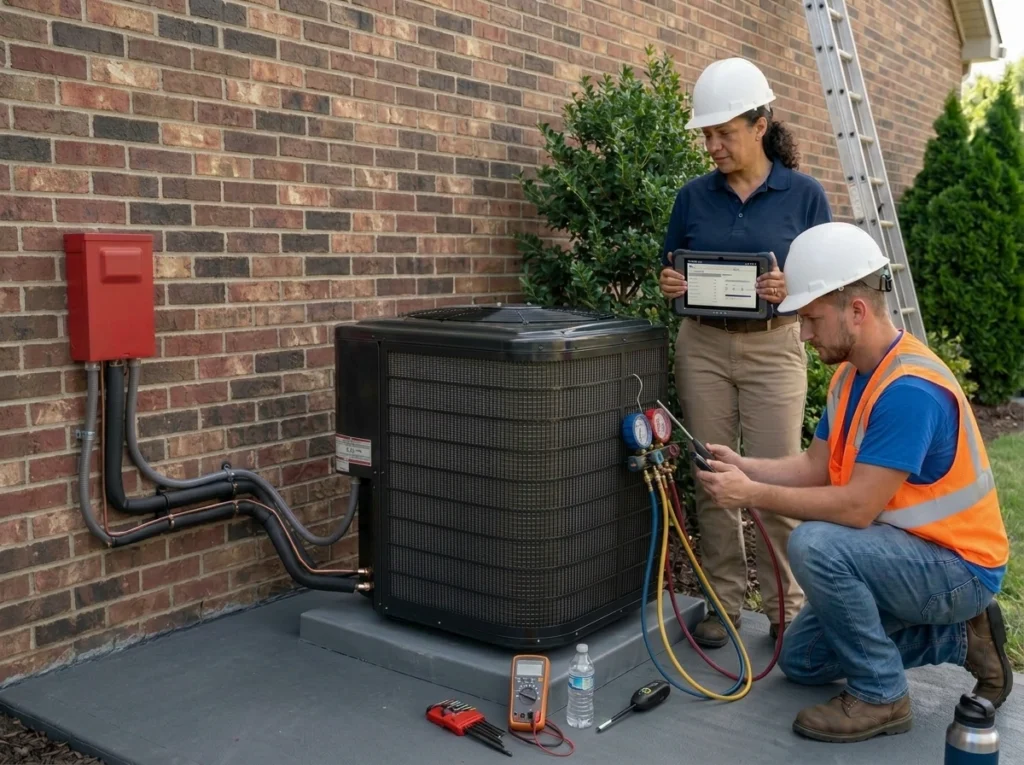
10 Common AC Installation Mistakes That Can Damage Performance
A successful AC installation requires careful planning, technical knowledge, and attention to detail. Homeowners often focus on equipment prices but overlook how installation quality affects long-term performance.
The following mistakes are some of the most common issues that can reduce efficiency, increase repairs, and shorten the lifespan of an air conditioning system.
1. Choosing the Wrong AC Size for Your Home
One of the biggest mistakes during AC installation is selecting a system based only on the size of the property or choosing a larger unit because it appears more powerful. An oversized air conditioner may cool the space quickly but fail to remove enough humidity because it frequently turns on and off.
An undersized AC unit creates another set of problems. It may run continuously while struggling to reach the desired temperature, increasing energy use and placing additional stress on important components.
Professional installers use cooling load calculations to determine the correct system capacity based on your home’s layout, insulation, windows, and local climate conditions.
Incorrect sizing can result in:
- Uneven cooling between rooms
- Frequent short cycling
- Increased equipment wear
- Higher energy bills
Avoiding these new air conditioner installation mistakes helps homeowners achieve better comfort and improved HVAC system performance.
2. Installing the AC Unit Without Proper Load Calculation
Every home has unique cooling requirements. Factors such as insulation quality, window placement, sunlight exposure, ceiling height, and home design all influence the amount of cooling capacity needed.
Skipping a professional load calculation can lead to incorrect AC installation because the selected system may not match the actual demands of the property. A unit that is too large or too small can struggle to maintain comfortable indoor temperatures.
Experienced HVAC professionals evaluate these conditions before recommending equipment. This approach helps prevent HVAC installation mistakes and ensures the system is designed for efficient operation.
A proper assessment before installation supports better comfort, lower operating costs, and more reliable performance throughout the year.
3. Incorrect Placement of Indoor and Outdoor Units
The location of AC components has a direct impact on system efficiency. The condenser unit requires enough space around it to release heat properly, while the indoor air handler needs suitable airflow conditions for effective cooling.
Installing outdoor equipment in restricted areas can limit heat transfer and make the system work harder. Similarly, poor indoor unit placement can create uneven temperatures and reduce comfort in certain rooms.
Professional installers consider:
- Air circulation requirements
- Heat release from outdoor equipment
- Maintenance accessibility
- Overall system efficiency
Proper placement allows the HVAC system to operate smoothly and reduces unnecessary stress on major components.
4. Poor Refrigerant Installation and Incorrect Charging
Refrigerant plays a critical role in the cooling process of an air conditioner. The system depends on the correct refrigerant level to absorb heat from indoor air and transfer it outside. Incorrect refrigerant installation can reduce cooling performance and create unnecessary stress on important components.
An improper refrigerant charge may cause the compressor to work harder than necessary, leading to reduced efficiency and possible system damage. Both undercharging and overcharging can affect HVAC system performance and increase operating costs over time.
Professional technicians follow manufacturer specifications when installing refrigerant lines and checking refrigerant levels. Proper measurements and testing help ensure the system operates safely while delivering consistent cooling.
5. Improper Ductwork Installation or Airflow Problems
Ductwork is responsible for moving cooled air throughout your home, making proper installation essential for comfort and efficiency. Poorly designed or incorrectly installed ducts can restrict airflow and prevent your air conditioner from delivering balanced cooling.
Common ductwork problems include air leaks, poor insulation, incorrect duct sizing, and blocked airflow pathways. These issues can force the HVAC system to operate longer, increasing energy use and reducing overall performance.
A professional ductwork inspection helps identify potential problems before they affect your comfort. Weak airflow, uneven temperatures, and rising energy costs can all be poor AC installation signs linked to airflow issues.
6. Ignoring Electrical Requirements During Installation
An air conditioning system requires proper electrical connections to operate safely and efficiently. Ignoring electrical requirements during installation can create safety risks and may affect the performance of the entire HVAC system.
Common electrical installation issues include incorrect wiring, insufficient electrical capacity, and missing safety checks. These problems can cause system failures, unexpected shutdowns, or damage to important components.
A qualified AC installation technician checks the electrical panel, connections, and system requirements before completing the installation. Proper electrical preparation helps ensure reliable operation and protects both the equipment and your home.
7. Failing to Check Drainage and Condensation Systems
Many homeowners overlook the importance of proper drainage during AC installation. While the cooling process removes moisture from indoor air, that moisture needs a correctly installed drainage system to leave the home safely.
Poor drainage installation can result in water leaks, mold growth, indoor property damage, and reduced indoor air quality. These issues may appear shortly after installation or develop slowly over time.
Professional installers inspect condensation lines and drainage systems to make sure water flows correctly. Proper drainage protection helps prevent avoidable repairs and keeps the indoor environment healthier.
8. Skipping System Testing After Installation
Completing the physical installation does not mean the process is finished. A new AC system requires careful testing to confirm that every component is operating correctly before homeowners begin using it regularly.
Professional testing helps identify issues that may not be visible immediately. Technicians check temperature output, airflow levels, refrigerant performance, and electrical connections to verify proper operation.
Skipping this important step can allow small installation problems to become larger repair issues later. A complete inspection after installation helps confirm that the HVAC system is ready to provide reliable cooling.
9. Hiring an Inexperienced Installer
Choosing an installer based only on the lowest price can create expensive problems in the future. AC installation requires technical knowledge, experience, and attention to manufacturer requirements to ensure the system performs correctly.
An inexperienced installer may overlook important details such as system sizing, refrigerant handling, electrical connections, or airflow requirements. These mistakes can reduce efficiency and shorten equipment lifespan.
Working with a trusted provider offering professional AC installation services gives homeowners confidence that the installation process follows industry standards. Experienced technicians understand how to properly install and test modern HVAC equipment.
10. Not Following Manufacturer Installation Guidelines
Every air conditioning system has specific installation requirements created by the manufacturer. Ignoring these instructions can affect performance, reliability, and even warranty protection.
Installation guidelines cover important details such as equipment placement, refrigerant requirements, electrical specifications, and system testing procedures. Skipping these steps may lead to incorrect AC installation and unnecessary future expenses.
A professional HVAC contractor follows manufacturer recommendations to help ensure the system operates as designed. Proper installation practices protect your investment and support dependable cooling performance for years.
Warning Signs Your AC Was Installed Incorrectly
After installation, homeowners should pay attention to how their new system performs. Some installation problems appear immediately, while others develop gradually as the system experiences regular use.
Recognizing poor AC installation signs early can help prevent larger AC repairs and protect your HVAC investment. If your system does not perform as expected after installation, it may indicate that important installation steps were missed.
Common warning signs include:
- Uneven Cooling: Different rooms have noticeable temperature differences despite the system running properly.
- Unexpected Energy Bills: Higher electricity costs may indicate the system is working harder than necessary.
- Frequent Cycling: The AC turns on and off repeatedly because of sizing or performance issues.
- Strange Noises: Unusual sounds may indicate installation problems affecting system operation.
- Water Leakage: Drainage issues can cause moisture problems around indoor equipment.
- Weak Airflow: Poor ductwork or incorrect setup may prevent cool air from reaching certain areas.
How Professional AC Installation Prevents Costly Problems
Choosing professional installation can make a significant difference in how well your air conditioner performs over time. A trained HVAC contractor follows a structured process to reduce installation risks and ensure every part of the system works together properly.
Professional installers focus on accurate measurements, correct equipment selection, and detailed system testing. These steps help prevent common issues such as poor airflow, uneven cooling, high energy consumption, and unexpected repairs.
Experienced technicians reduce installation risks through:
- Proper Sizing: A professional evaluates your home’s cooling requirements to recommend equipment that matches your space.
- Accurate Measurements: Detailed assessments help prevent sizing errors and ensure the system is installed according to your home’s conditions.
- Manufacturer-Compliant Procedures: Following installation guidelines helps protect system performance and maintain equipment reliability.
- Testing After Installation: Technicians verify airflow, temperature output, refrigerant levels, and electrical connections before completing the project.
- Safety Inspections: Professional checks help identify potential issues before they affect your comfort or system operation.
Investing in professional AC installation services helps homeowners avoid costly mistakes and ensures their cooling system operates efficiently from the beginning.
What to Look for When Choosing an AC Installation Company in San Jose
Selecting the right installer is just as important as choosing the right air conditioner. A qualified company should provide more than basic equipment installation. Homeowners should look for experience, technical knowledge, and a clear installation process that focuses on long-term system performance.
When comparing local HVAC providers, consider their experience with residential systems, installation methods, and customer service approach. A reliable contractor should explain recommendations clearly and help homeowners understand what to expect before, during, and after installation.
Important factors to evaluate include:
- Experience and Certifications: Trained technicians understand modern HVAC equipment, installation requirements, and industry best practices.
- Installation Process: A professional company should include system evaluation, proper installation, testing, and final performance checks.
- Transparent Pricing: Detailed estimates help homeowners understand project costs and avoid unexpected charges.
- Customer Reviews: Previous customer experiences can provide insight into service quality and installation reliability.
For homeowners searching for AC installation San Jose, choosing an experienced provider helps reduce risks associated with poor installation. A trusted AC installation company San Jose homeowners rely on should focus on quality workmanship rather than quick installation alone.
Professional HVAC installation services San Jose residents choose should prioritize proper system setup, safety, and long-term comfort.
AC Installation Mistakes vs Professional Installation: What Changes?
The difference between poor installation and professional service often becomes clear through system performance. While incorrect installation may create ongoing problems, a properly installed system is designed to provide reliable cooling, improved efficiency, and fewer repair concerns.
| Poor Installation Practices | Professional Installation Approach |
| Incorrect AC sizing | Proper cooling load calculation |
| Limited system testing | Complete performance verification |
| Poor airflow planning | Optimized air distribution |
| Short-term fixes | Long-term reliability focus |
| Higher repair risks | Better efficiency and lifespan |
A professional installation approach focuses on preventing problems before they occur. Proper planning, accurate setup, and careful testing help ensure the HVAC system performs as intended.
Frequently Asked Questions About AC Installation Mistakes
What are the most common AC installation mistakes?
Common mistakes include choosing the wrong system size, skipping load calculations, poor equipment placement, incorrect refrigerant handling, and ignoring airflow requirements. These issues can reduce comfort and increase operating costs.
Proper planning and installation by trained professionals help prevent these problems and ensure the HVAC system operates efficiently.
Can incorrect AC installation increase energy bills?
Yes. Incorrect installation can force an air conditioner to work harder than necessary. Problems such as poor airflow, incorrect sizing, or improper refrigerant levels can reduce efficiency and increase electricity consumption.
A properly installed system is more likely to maintain comfortable temperatures while using energy effectively.
How do I know if my AC was installed incorrectly?
Signs of installation issues may include uneven cooling, weak airflow, frequent cycling, unusual noises, water leaks, and unexpected increases in energy bills.
If these problems appear soon after installation, homeowners should contact a qualified HVAC professional to inspect the system.
Should I hire a professional for AC installation?
Professional installation reduces the risk of performance issues and helps protect your HVAC investment. Experienced technicians understand system requirements, safety procedures, and manufacturer guidelines.
A trained installer can ensure the equipment is properly sized, connected, tested, and ready for reliable operation.
How much does AC installation cost in San Jose?
AC installation costs vary depending on factors such as system type, home size, equipment requirements, installation complexity, and whether existing components need replacement.
A professional HVAC company can evaluate your home and provide an accurate estimate based on your specific cooling needs.
Final Thoughts: Avoid Installation Mistakes Before They Become Expensive Repairs
A new air conditioner is a long-term investment, and proper installation plays a major role in protecting that investment. Even advanced HVAC equipment can experience performance problems when installation steps are rushed or handled incorrectly.
Homeowners should focus on installation quality rather than choosing a system based only on price. Proper sizing, careful setup, and complete testing help prevent AC installation problems while improving comfort and efficiency.
If you are planning a new installation or AC replacement in San Jose, Innovation Heating & Air Inc. provides professional solutions designed around your home’s specific needs. Our experienced team helps ensure your system is installed correctly so you can enjoy reliable cooling, better efficiency, and lasting comfort.
